Tag: Book Reviews

  • The Titanic + Zombies = Awesomeness

    The Titanic + Zombies = Awesomeness

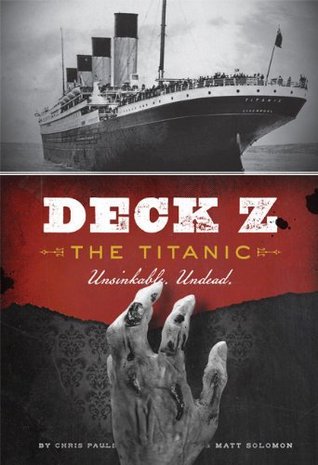
    deck-z-book-cover

    Deck Z: The Titanic: Unsinkable. Undead

    by Chris Pauls and Matt Solomon

    published September 2012 by Chronicle Books LLC

    This review may contain spoilers.


    This book is one of the most awesome books I’ve ever read about the Titanic.

    In Deck Z, a zombie virus breaks out on board the the ship, and Thomas Andrews and Captain Smith team up with a few others to battle walking dead. None of this actually happened in real life, of course, except the part about the ship sinking, but that doesn’t matter. I’d still recommend it to any person who counts the study of the Titanic among their hobbies.

    I’m not a fan of the whole zombie apocalypse trend that’s been popular in the last few years. With the way the world is today, I do not want to spend my free time fantasizing about what it would be like to be one of the handful of people who survives in a world where most of the population has been turned into zombies. I suspect that this book is a product of the craze, but I didn’t care about any of that when I found it. I could not resist the opportunity to read Deck Z, which, though fiction, offers such a different perspective of the disaster.

    As a person who’s been studying the Titanic since childhood, I’ve read my fair share of books about the ship, its people, and its foundering. I haven’t read much fiction about the ship, though. I’ve read some fanfiction (I’ve even written some), but now that I think about it, I can’t recall reading one fiction book about the Titanic. That’s so odd because I know that these books exist. I guess you could count Zero: 999, an interactive graphic novel that I recently completed. And of course, I’ve played games based on it. My absolute favorite was the computer game Titanic: Adventure Out of Time, but there was also Titanic: The Board Game.

    I love how Captain Smith is portrayed in Deck Z. He’s one of the major heroes in the story, and he wields a bad-ass sword (which he uses to skillfully decapitate zombies).  In many fiction films I’ve watched, Smith seems to be relegated to almost a supporting role in all the drama of the night. He’s the captain—it’s awesome that he gets a starring role in Deck Z.

    Thomas Andrews also gets the star treatment here. How? Let’s just say that homemade grenades made out of squash balls are involved. Pure awesomeness.

    I was honestly surprised by how much I enjoyed Deck Z. The only reason it caught my attention in the first place was the Titanic connection, and I expected it to be mediocre at best. But surprise, surprise–the plot and the writing are actually good! I’ve always wanted the chance to walk Titanic’s decks (I kind of already have if you can count visiting the Titanic museum in Pigeon Forge). While I can’t say that I ever wanted to do this during an outbreak of a zombie virus, reading Deck Z made me feel like I was right there in the middle of the action. This book is a must-read for anyone who’s read extensively about the Titanic and may want a change of pace on the topic.

  • A Journey Along Cane River

    A Journey Along Cane River

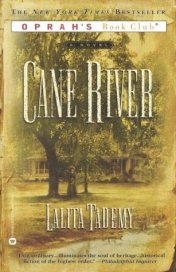
    Cane River by Lalita Tademy

    Published April 2001 by Grand Central Publishing

    Cane River book cover

    A blend of fact and fiction, Cane River explores the history of Tademy’s family. Tademy tells the story of four generations of her slave-born female ancestors: Elisabeth, Suzette, Philomene, and Emily, all born along the Cane River in Louisiana. Their stories revolve around how they try to create a better life for themselves and their children while constantly having to find a way to work within and around the limits that society has placed upon them.

    (more…)

  • OOC Ship of the Line

    OOC Ship of the Line

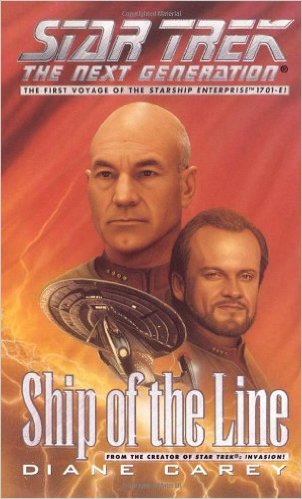
    Ship of the Line book coverShip of the Line by Diane Carey

    Published May 1, 1999, by Pocket Books

    Ship of the Line revives a storyline from the Star Trek: The Next Generation episode “Cause and Effect”.  In that episode, the Enterprise crew experiences a temporal causality loop where they keep experiencin the same sequence of events over and over again. It’s kind of like Groundhog Day, except in the TNG episode, the crew initially don’t realize what is happening.  They don’t realize that they are repeating the same day until late in the game.  When they discover what has been happening, they, of course, come up with a solution, but that solution causes a Federation ship called the Bozeman to travel to the 24th Century from 90 years in the past. (more…)

  • The Senator, The Socialite, and Their Bratty Son

    The Senator and the Socialite: The True Story of America’s First Black Dynasty by Lawrence Otis Graham

    Published June 27, 2006 by Harper

    The Senator and the Socialite is the true story of Blanche K. Bruce, a Mississippian who was the first elected black senator to serve a full term in the U.S. Senate. In the book, Graham chronicles the Bruce family’s rise to prominence during the 19th Century, a time when blacks were truly on the bottom rungs of society. Graham also relates the story of the family’s subsequent decline in the 20th Century.

    As a black Mississippian, I’d heard of Bruce before reading this book. He was one of the famous names that Mississippi school children hear about as they’re growing up and learning about state history. But I’d never read more than paragraph about him, even in grad school. When I first noticed this book on my mother’s dresser, I couldn’t pass up the chance to read a whole book about not just Bruce but also his family.

    The Senator and the Socialite starts off great. It’s historical non-fiction, but it’s certainly not a dry read. Graham is a very capable writer. As expected, I learned a ton of new stuff. For example, I had no idea that Mississippi has had a black Lt. Governor. Alexander K. Davis served as Lt. Governor under Adelbert Ames. Even more amazing is that Davis and Ames were elected in November 1873.

    The more I read about Bruce and his wife, Josephine, the more I didn’t like them, which is something I hate to admit. They both seemed extremely opportunistic, and there doesn’t seem to be any justifiable reason for it. They both wanted to acquire and hold onto power, even when it meant neglecting their extended family. When I think of historical figures who accomplished great things, I tend to think of them as having pure reasons for their actions, and I find myself holding them to a kind of lofty ideal. When I read accounts like what’s in The Senator and the Socialite, it brings these people down to reality, and I realize that they were humans with flaws, like the rest of us. I guess that can be both a good and bad thing.

    Unfortunately, my dislike for the Bruces isn’t limited to Blanche and Josephine. I feel the same about Roscoe, their son, though, his personality isn’t totally his own fault. His parents were often so busy with their own professional and social obligations that they didn’t spend any time with their kid. It’s heartbreaking to read about how he wanted to get to know them, how he yearned for closeness with them, but they just weren’t there for him emotionally.

    In Chapter 15, we finally get an instance where Roscoe doesn’t seem like a snob. Josephine wanted him to marry someone from a wealthier family so that problems wouldn’t arise due to mismatched financial backgrounds. Her brother’s first wife was a woman from a family of more modest means than theirs, and when they split, she took everything he had – literally. The woman took all his possessions. Josephine didn’t want Roscoe to succumb to the same fate. But Roscoe didn’t budge. He wanted Clara, even though her family was middle class and not as wealthy as the Bruces.

    As I began Chapter 15, I thought that Roscoe may have matured and turned over a new leaf, but my thoughts were premature. Right before his marriage to Clara, he was such an ass about the wedding and who was supposed to pay for it. He wanted a grand wedding but he wasn’t willing to help Clara’s family pay for it, even though they couldn’t afford all the things he demanded. I’ve never heard the term groomzilla, which would be the male version of a bridezilla, but I would say Roscoe definitely qualified. He wouldn’t help pay for the wedding, and he was unwilling to postpone it so that Clara’s family could save some more money for it. Also, he made Clara leave school to marry him and suggested that she was immoral for wanting to postpone so that she could finish. What a jerk!

    Josephine had at least one moment of redemption, too. In Chapter 16, she decided to pay her workers, going against the advice of her asshat brother-in-law. So the Bruces weren’t totally opportunistic about everything. To be fair, the Bruces aren’t the only ones who seemed less shiny to me by the time I finished the book. Through the accounts that Graham decides to include, he also manages to make Booker T. Washington seem like a total dick.

    Final Opinion

    While it was certainly interesting to read about this extraordinary family, I can’t help but feel sad about the outcome. In a way, even the modern family doesn’t leave any hope for a happy ending for the “dynasty”. Nearly all of the Bruce descendants have disappeared or have chosen to obscure their family ties to the family. Some of the descendants live as white people and refuse to acknowledge ties due to racial reasons. And many of the family members who look black don’t necessarily feel the need to embrace the family history.

    Honestly, my opinion of Bruce and his family kept declining throughout the book, and they never really were able to redeem themselves to what my opinion of them had been prior to reading the book. Granted, prior to reading the book, I’d known very little about them, but I’d had a positive perception because of Blanche Bruce’s role in the history of Mississippi and the nation. The Senator and the Socialite was a great book, but the story it tells is overwhelmingly sad.

  • The Buried Age

    Star Trek: The Next Generation: The Buried Age by Christopher L. Bennett

    Published June 27, 2007 by Pocket Books

    Summary

    The Buried Age covers the period of time in Picard’s life leading up to the first mission of the Enterprise-D.  Following the loss of the Stargazer, Picard, believing that his future in Starfleet is in doubt, focuses on archaeology and begins an exploration of a buried age of the ancient galactic history.

    Let the Gripes Begin

    The premise is intriguing.  Otherwise I wouldn’t have picked the book up.  Picard isn’t exactly an open book, so having the opportunity to learn about his past prior to the Enterprise was something I just couldn’t pass up.  But a book needs more than a good premise to be successful, and this one has some problems that keep it from being great.

    First of all, the book is slow!  At least in the beginning, it is.  There’s very little action to drive the book along, and I’ve come to appreciate a fair amount of action in Trek books. It’s something I’ve become accustomed to, and while it’s not necessary for the book to be all action, there needs to be some.  If I recall correctly, this is a gripe that fans had during the first season of TNG – too much talk, not enough action, so we’ve seen this situation before.  With the show, it could be attributed to the fact that fans were comparing Picard and Kirk.  It took time for them to get used to the fact that the two men are very different captains and have very different methods of resolving problems.  Picard prefers a more diplomatic approach, while Kirk is the kind of captain who shoots first and asks questions later. Picard is the focus of the book, so I guess I shouldn’t be surprised there isn’t a ton of action.  Picard isn’t a cowboy.

    Tech Speak!

    The writing also has a tendency to get very technical, and I often found myself lost in all the science talk – it’s very difficult to follow at times. I get it – Trek is science fiction, so there are supposed to be technical bits.  After all, it wouldn’t do to have Trek devolve into space opera.  But I don’t understand why Bennett spends so much time having characters explain intricate technical phenomena, especially while glossing over the action bits. Every once in a while – okay, I can deal with that, but it seems like it happens so often in this book. I found myself skimming over those parts because they’re just too much.  Those passages are difficult to follow, and I question just how relevant they are to the overall plot.  I realize that some readers probably love all the tech details, and that’s totally cool.  But I’m not one of those readers.  The action is what I want to read!  My eyes glaze over when I have to read a page-long explanation of some technological process I’m not interested in.  Ugh!  It plays a big role in ruining this book for me.  There is just way too much tech speak!

    (Spoiler Alert!  Don’t read past this point if you don’t want to know what happens.)

    I’d approached this book thinking I would be reading about my favorite characters.  After about the first ten chapters, the only familiar faces and names I’d encountered were Picard and Guinan, and even then, Guinan only appears for a few pages.  I almost gave up, but then Kathryn Janeway pops up unexpectedly at the end of Chapter 9.  Her appearance was the only thing that kept me reading.  Curiosity about how the plot would be resolved wasn’t even enough to keep me interested.  Combine that with the slow pace and the lack of canon characters, and you’ve got one dull read.  Maybe I should have somehow known what I was getting into when I bought the book, but I guess I thought learning more about Picard’s history would be more interesting.  Luckily for me, things eventually did get more interesting.  One reason is because more familiar faces, like Janeway, appear.  After this, the plot seemed to pick up some steam.

    Sabotage

    Bennett somehow managed to sabotage my enjoyment of the action that eventually did appear in the book, though.  How?  By rushing through scenes.  I know that he does it to move the plot along, and it’s necessary at times because the book covers such a large swath of time, but Bennett also does it when it would be better to let the action play out, such as when Ariel freaks out in the city.  That scene would have been great if Bennett had been more active in his portrayal.  Instead, he provides a passive account.  One of the things that makes great books great is their ability to pull you into the story so that you feel like you’re sitting there watching the action from a front-row seat or even standing in the middle of the action.  The way Bennett writes, you feel as if you’re only getting a re-cap.  It’s just not engaging.

    Lessons

    So it turns out that Ariel double-crosses Picard.  I can’t say that I didn’t suspect that this might end up being the case, just from the summary on the back cover.  But there were other clues throughout the plot, too, such as Picard’s uncharacteristic behavior in letting Ariel’s desires influence his actions so much, especially after he returns to Starfleet.  On the other hand, for all we know, that may not be so uncharacteristic for Picard at this point in his life, given that we don’t really know much about Picard’s personality from before his time as the Enterprise’s captain.  The only significant clues I’ve ever learned about his pre-Enterprise personality were gleaned when we saw his brashness as an Academy cadet in the TNG episode “Tapestry”, which depicted how Picard ended up with an artificial heart.

    Part IV is the best part of the book for me.  The action and flow of the plot in this part is more in line with what I’d expect of a Trek book, plus we get to see how Picard chose more members of his command crew for the Enterprise.  Good stuff!  This part of the book actually makes me want to watch TNG’s season 1.  That’s saying a lot because Season 1 of TNG is probably my least favorite season in all Trekdom, no joke.

    In addition to being plain old good, the final chapters also bring together some important themes of the book, namely guilt and the toll it can take on an individual; and the ability to let go of the past, live for the present, and welcome the adventure of the future.  The latter theme is what hit home for me the most, as it’s something I’ve find myself struggling with often.  Picard tells Ariel that she shouldn’t mourn the past.  She should view the unknown as an adventure.  Moving on in life is difficult, but you can’t remain somewhere that seems comfortable if it’s obvious that you’ve outgrown it, as Ariel has outgrown the corporeal plane of existence.  Don’t look at the past in terms of what you’ve lost – look at the future with excitement over what new things you’ll experience and the new people you’ll meet.

    The guilt thread is relevant to me, too, because I do have a tendency to feel guilty about failures, as Picard does.  What Deanna tells Picard about his history of success – it almost sounds like she could be speaking directly to me.  Like Picard, success has often come so easily to me that I expect it.  Failure has been something that I’ve viewed as unacceptable, something that needs to be fixed.  But that isn’t always possible or even desirable, and you mustn’t allow yourself to become obsessed by it.

    The Buried Age begins slowly, but it eventually picks up steam and becomes an interesting read in the later chapters.  It unexpectedly touched on some issues that I’ve been trying to deal with in my life, which has been rare for me when it comes to Trek books, though I know it’s not at all uncommon for that to happen.  I don’t think I can go so far as to call the book great, but it’s a solid good.