Author: Brandie

  • Black People and Titanic: The Reality

    Black People and Titanic: The Reality

    The story of Joseph Laroche is one that has, until relatively recently, been largely forgotten in Titanic memory and discourse.  The lingering question concerns why this is the case.  You would think that seeing a black man walking the decks of the ship with a white woman and their offspring would make a lasting impression on Titanic’s passengers, particularly the first- and second-class passengers, but little mention is made of Laroche or his family.  It was only in the year 2000 that his story rose to prominence as a result of a Titanic exhibit in Chicago.  This oversight helps explain the prevalence of the mythical Shine in African-American memory instead of Laroche.

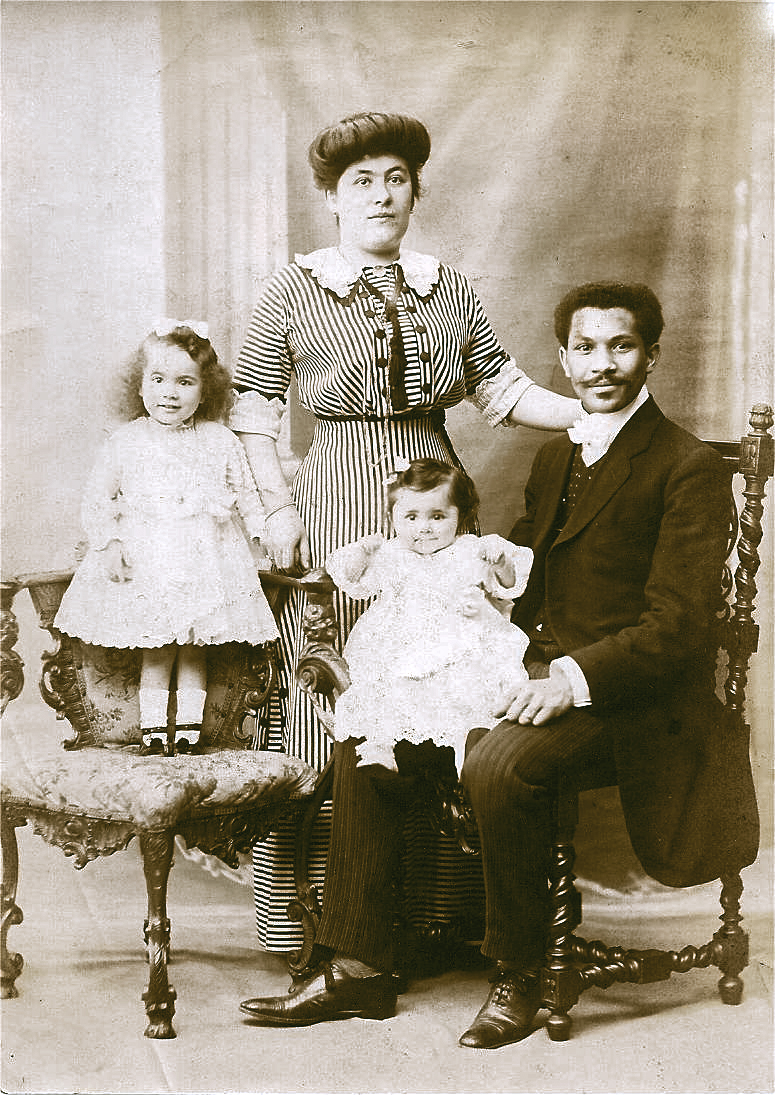
    Laroche was born in Cap Haiten, Haiti, on May 26, 1889 to a prominent Haitian family.  His uncle, Dessalines M. Cincinnatus Leconte, was the president of Haiti from July 1911 until August 1912 when he died in an explosion.  Laroche left Haiti at the age of fifteen to study engineering in Beauvais, France.  While he was there, he met Juliette Lafargue, who lived in Villejuif, a nearby town.  The two married in March 1908.

    After he earned his engineering degree, Laroche was unable to find suitable employment in France because of his skin color.  Laroche had a wife and two young daughters that he wanted to support on his own, without the help of his father-in-law.  Shortly after he learned that Juliette was expecting a third child, Laroche decided that he should return to Haiti with his family while his wife was still able to travel.  Initially, the family was to travel on the French liner La France, however the liner’s strict policy required children to remain in the ship’s nursery during meal times, which didn’t appeal to the Laroches.  They exchanged their first-class tickets for second-class tickets on the Titanic.  The family boarded the ship at Cherbourg, France on the evening of Wednesday, April 10.

    In her article about the Laroches, “What Happened to the Only Black Family On the Titanic?” Zondra Hughes asserted that race was an issue aboard the ship and that the Laroches’ presence elicited insults and crude behavior directed at them by crewmembers and fellow passengers.  Hughes was not alone in her assertions.  A press release that appeared in the Philadelphia Inquirer about an exhibit featuring the Laroches stated that racism was rampant on the ship and the family had to endure derogatory comments and behavior.  However, a letter that Juliette wrote to her father while the Titanic was at Queenstown, Ireland, paints a different picture.  She did not mention any racially motivated incidents directed at her or her family.  In fact, she wrote that they had become acquainted with another French family, whom they had traveled from Paris with on the train and dined with onboard the ship.  She also wrote that “the people onboard are very nice.”  It should be kept in mind, however, that when Juliette Laroche wrote her letter, she and her family had been aboard the ship for less than 24 hours.  They would spend four more days at sea – plenty of time to experience the conditions outlined by Hughes and the Inquirer.

    Little has been written about the Laroches in survivor accounts of the sinking, which is surprising. Nowhere in the 1912 press descriptions of the ship and the interviews with the survivors was the presence of a black family among the passengers ever mentioned; in fact, this information has come to light only relatively recently through the efforts of French researcher Olivier Mendez.  It seems really strange once you take into account how eager surviving passengers and crew were to disparage other ethnic groups.  It became such a problem that the White Star Line was forced to apologize for derogatory statements made by Titanic’s crew about ‘Italians’ (a generic term for all the darker-skinned passengers) and their behavior during the last moments on the dying ship.

    The only mention of Simonne and Louise Laroche, Joseph and Juliette’s daughters, was made by Kate Buss in a letter home: “There are two of the finest little Jap[anese] baby girls, about three or four years old, who look like dolls running about,” she wrote. On Sunday night, as passengers became aware of the ship’s peril, Joseph, who spoke fluent English, learned of the ship’s condition and quickly placed his family in a lifeboat.  Laroche is believed to have perished, and his body was never recovered.  Juliette and her children completed the trip to New York aboard the Carpathia. Once there, Juliette decided to return to France with her daughters on a French liner, and she moved back into her father’s house in Villejuif. She gave birth to her and Joseph’s third child, a son, in December 1912.  After suing the White Star Line for damages, Juliette was awarded 150,000 francs in 1918.  She used the money to open a fabric-dying business to support her family, which had lived in poverty throughout the First World War.  Neither Juliette nor her daughters devoted much effort to speaking publicly about the event.  Juliette only discussed it with a handful of close friends, and her daughters followed suit for the better part of a century.

    According to the Titanic Historical Society, Louise Laroche was a member of the organization from its beginning in 1963 until her death in 1998. Despite Laroche’s membership, however, communication between her and the organization was thin due to language barrier (she only spoke French).  The silence was finally broken when Oliver Mendez, who is fluent in French and is also a THS member, visited Laroche at her home in France.  The story of that meeting, and ultimately of the Laroches’ passage aboard the Titanic, appeared in the Titanic Commutator, THS’s periodical, in 1995.

    Since Mendez’s meeting with Louise Laroche, the Laroches’ story has gained more notoriety.  Judith Geller’s book Women and Children First, as well as a traveling Titanic exhibit featuring the Laroches, took giant steps toward publicizing their story.  The exhibit’s first location was the Chicago Museum of Science and Industry in 2000.  The exhibit ran for seven months in Chicago and visited a number of other cities, including Seattle, Los Angeles, Paris, and London.  This was the first exhibit to tell the story of the Laroches.  Within the exhibit, two program interpreters portray Joseph and Juliette Laroche.  The exhibit takes a necessary and admirable step in portraying the couple, however, issues concerning the memory of the couple arise with the portrayal.  The actors portraying the Laroches are both black; in reality, Juliette Laroche was Caucasian.  This calls into question the accuracy of the memory of the Laroches that is being perpetuated, but those involved with the exhibit have brushed aside any qualms about Juliette’s portrayal by a black actor. One of the actors who has portrayed Juliet has said that she doesn’t believe her portrayal of Juliette is historically inaccurate. “I’ve seen her picture, I’ve seen her features,” she said. “She definitely looks like she could have been mixed to me.”
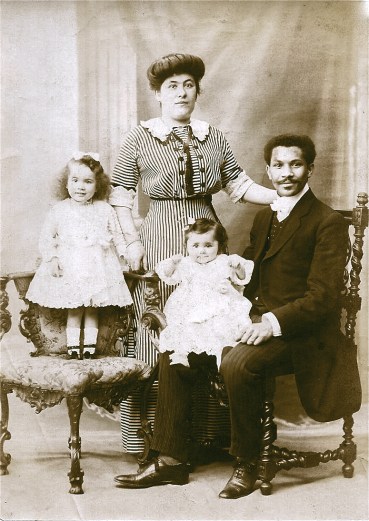
    The_Laroche_Family,_c._1911_-_Paris,_France

    The sinking of the Titanic was a tragedy, without a doubt.  Fifteen hundred people died when it was within the technological means of the day to save them.  Titanic was traditionally been judged to be historically insignificant, important only to enthusiasts and buffs.  Utilizing traditional barometers of historical value such as economics and politics, the conclusion that the Titanic disaster is insignificant is valid.  However, if the event is viewed from a different perspective, one that takes into account the cultural ramifications of the ship and the sinking, Titanic appears to be far from insignificant, and many new avenues of study and research present themselves.

    One of those areas is the connection between African Americans to the Titanic.  Outside of Leadbelly’s famous blues song about the ship and the legend concerning Jack Johnson’s attempt to book passage, there really has been no discussion of the Titanic in relation to blacks.  Look a little deeper, however, and one discovers that the Titanic and blacks were not so distant from each other after all.  While the mainstream press missed the connection, one nevertheless existed.  Blacks, despite their apparent distance from the disaster, were more than merely aware of it.  They infused it with their own collective memory of it through oral traditions, such as blues songs and most notably through the Titanic toast and Shine.

    The connection transcends even this pseudo-link.  A black man and his family traveled in second class on the Titanic.  While Joseph Laroche was Haitian and not technically African American, the presence of a man of African descent aboard the Titanic was extraordinary.  The fact that he traveled in second-class accommodations, rather than third-class, also adds to this fascinating tale.  Even more remarkable is that this story has been obscured from the popular history of the Titanic until relatively recently.

    Joseph Laroche’s story and the history Titanic toast phenomenon have not been obscured by any deliberate means, but as a result of cultural circumstances and differences.  Despite these circumstantial hurdles, stories like Laroche’s and Shine’s are reasons that people persist in studying the Titanic and history at large.  They also provide reasons for why historians should not hastily dismiss seemingly insignificant events as lacking historical value.  So many stories have yet to be told, and sometimes those stories are found in the most unlikely places with the most unlikely people.

    Sources:

    Barczewski, Stephanie, Titanic: A Night Remembered, London:  Hambledon and London,   2004.

    Beesley, Lawrence, The Loss of the S.S. Titanic: Its Story and Its Lessons, Boston: Houghton Mifflin Company, 1912.

    Biel, Stephen, Down with the Old Canoe: A Cultural History of the Titanic Disaster, United States:  W.W. Norton and Co, Inc., 1996.

    Confino, Alon, “Collective Memory and Cultural History: Problems of Method,” in The American Historical Review, Vol. 102, No. 5,Dec., 1997, pp. 1386-1403.

    Everett, Marshall, Wreck and Sinking of the Titanic: The Ocean’s Greatest Disaster, Edison, New Jersey: Castle Books, 1998, 1912.

    Fabre, Genevieve and Robert O’Meally, History and Memory in African American Culture, Oxford: Oxford University   Press, 1994.

    Geller, Judith, Women and Children First, New York : Norton, 1998.

    Gracie, Archibald, The Truth About the Titanic, Mitchell Kennerly: New York, 1913.

    Howells, Richard, Myth of the Titanic, New York:  St. Martin’s Press, 1999.

    Jackson, Bruce, Get Your Ass in the Water and Swim Like Me: Narrative Poetry from Black Oral Tradition, Cambridge, Mass.: Harvard University Press, 1974.

    Jones, Jerry, Dolemite, Santa Monica, CA: Xenon Pictures, 2002, 1975.

    Lord, Walter, A Night To Remember, New York : Bantam Books, 1997, 1955.

    Moore, Rudy Ray, Eat Out More Often, Los Angeles: Kent, 1971.

    Rasor, Eugene, The Titanic: Historiography and Annotated   Bibliography, Westport, Conn.: Greenwood Press: 2001.

    Lord, Walter.  The Night Lives On.  New York:  Morrow, 1986.

    Pellegrino, Charles.  Ghosts of the Titanic.  New York:  William Morrow, 2000.

    Tibballs, Geoff.  The Titanic:  The Extraordinary Story of the ‘Unsinkable’ Ship.  Pleasantville, New York:  Carlton Books Limited, 1997.

    Davie, Michael, Titanic: Death and Life of a Legend, New York : Knopf : Distributed by Random House, 1987.

    Butler, Daniel Allen, Unsinkable: The Full Story of the RMS Titanic, Mechanicsburg, PA: Stackpole Books, 1998.

    Hughes, Zondra, “What Happened to the Only Black Family on the Titanic?”, Ebony,  June 2000.

    Hull, Diane. “The Toast of the Titanic Oral Tradition Carries On Legend of Lone African American,” in Washington Post, December 20, 1997; Page F01

    Miller, Sabrina L., “Untold Story Of The Titanic,” in the Chicago Tribune February 20, 2000.

    “Astor Put Boy By Wife’s Side.”  Worcester Evening Gazette. 19 April 1912.

    “Astor Saved Us, Say Women.”  New York Times.  22 April 1912.

    “Benjamin Guggenheim.”  New York Times.  16 April 1912.

    “Brooklynites Are Lost as Titanic Sinks.”  Brooklyn Daily Times.  16 April 1912.

    “Ismay Condemned for Taking a Boat.”  Washington Times.  19 April 1912.

    Mackay, Gordon.   “Mrs. Candee Tells of Tragic Scenes as Steamer Sank.” Washington Times, 19 April 1912.

    “San Francisco’s Assessor Tells Story of the Wreck of The Titanic.”  San Francisco Bulletin. 19 April 1912.

    “Says Ismay Took First Boat.”  New York Times.  19 April 1912.

    “Tells of Rescue from Titanic.”  Galesburg Evening Mail.  23 April 1912.

    “Titanic Survivor Writes of Horror to Friend Here.”  Evening Bulletin.  20 April 1912.

    Two Survivors Call on Mayor to Ask Relief.”  Evening World.  22 April 1912.

    Encyclopedia Titanica, http://www.encyclopedia-titanica.org

    “A Haitian Family Which Traveled in Second Class Aboard Titanic,” The Titanic Historical Society 10 November 2008, http://www.titanic1.org/people/louise-laroche.asp.

    “Laroche’s – Haitian Family’s Dramatic Story On Board The Titanic,”  Titanic – Nautical Society and Research Center,  http://www.titanic-nautical.com/RMS-Titanic-LaRoche-FI.php.

    “Passenger and Crew Information.”  WebTitanichttp://www.webtitanic.net/framenumber.html.

    Sultana Disaster Online, http://sultanadisaster.com

    Titanic Historical Society, http://www.titanichistoricalsociety.org.
  • Black People and Titanic: The Myth

    Black People and Titanic: The Myth

    Almost immediately after the news of the Titanic’s demise began to spread, the memory of the ship and the sinking was key.  Before it even reached New York City, the Carpathia, the ship that rescued the survivors of Titanic, was inundated with wireless messages from press agencies requesting information about the sinking, including personal accounts.  The Carpathia arrived in New York City the night of Thursday, April 18.  As survivors disembarked, they were greeted by throngs of reporters and photographers who crowded the pier, intent on coming away with photographs and news stories about survivors.  Within hours of the Carpathia’s arrival, Senator William Alden Smith spearheaded an inquiry into the cause of the sinking.  A few weeks later, a British inquiry also occurred.  A few months after the sinking, the first film ever depicting the Titanic’s sinking, Saved From the Titanic, was produced, starring Dorothy Gibson, an actress and an actual survivor of the real disaster.

    All these events are memories of the Titanic, popular in American culture today and in 1912.  They all have much in common, but one particular aspect is that they do not include African-American reactions to or memories of the ship.

    In 1912, an array of more pressing matters besides the sinking of the Titanic demanded the attention of African-Americans of the period.  They faced a steep battle for basic rights in America, and the Titanic seemed far removed from their reality.  However, it was not as distant in reality as previously thought.  A Haitian man traveled onboard the Titanic from France with his young family.  This nugget of information has been left out of the mainstream Titanic narrative, which begs the question of why it has been omitted. You’ll hear more about the Laroches in tomorrow’s post.

    Despite their apparent distance from the Titanic disaster, blacks appropriated the memory of the Titanic and adapted it for their own use.  For African-Americans, the Titanic lived in music as well as narrative poems called toasts.  Why did African-Americans remember the Titanic in these manners, and what meanings did the Titanic hold for them?  Additionally, why has the story of a real black man aboard the ship largely escaped the notice of both blacks and whites?  In the case of blacks, why has the memory of the real man, Laroche, been replaced with that of a mythical Titanic crewmemeber named Shine?

    SHINE

    Dolemite

    The sinking of the Titanic entered folk tradition in three ways: a little-known black spiritual, a well-known camp and college song, and a toast, the most widely known of the three. A toast is an expressive performance of a narrative poem and uses humor to relay a message.  Toasts may be based on historical events or people, but the content of the narratives are usually fictional.  In Get Your Ass in the Water and Swim Like Me: Narrative Poetry from Black Oral Tradition, Bruce Jackson compiled and analyzed popular African-American toasts. Jackson suggests that toasts are attempts to deal with harsh realities of blacks’ experiences during the twentieth century. In toasts, a performance-audience situation always exists, as the audience is one of the key requirements. Toasts are similar to jokes.  The main difference is that jokes have only one punchline, usually, while toasts have many.

    One of the most prominent examples of the Titanic in African-American memory is a narrative poem about a fictional black stoker aboard the Titanic named Shine. The Titanic toast is one of the three most frequently told toasts.  The other two are “Stackolee,” about an archetypical badman who will fight someone upon a moment’s notice, and “Signifying Monkey,” about a monkey who outsmarts a lion in the jungle.

    The exact date of origin for the Shine toast is unclear, however sources trace the narrative back to at least the 1920s.  There are many different versions of Shine’s story.  All of them are riddled with factual errors, and they are all inconsistent with each other; however, all the versions follow the same basic premise and pattern. Shine is supposedly the only black person aboard the Titanic, and he manages to survive the sinking. He is down in one of the boiler rooms of the Titanic when the ship hits the iceberg.  Shine goes above deck and tries to warn Captain Smith that the ship is in great peril, however, Smith refuses to hear what Shine has to say and orders him back below decks.  Shine disobeys and jumps overboard.  After Shine leaves the ship, the passengers finally learn of the ship’s danger and plead with him to save them, offering wealth and sex, but Shine refuses them.  He swims for America, racing a shark along the way.  His final destination differs among the different versions of the story.  Some depict Shine in Harlem, while others depict him in Chicago.

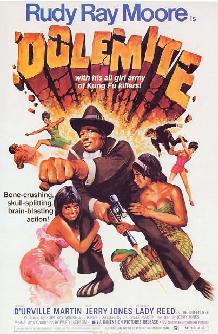
    Because oral traditions, by definition, privilege the spoken word over the written, stories change with the person delivering it.  No two people tell a story exactly alike.  The same person might not necessarily tell the same story in exactly the same way each time he delivers it.  He may change words or entire verses for a variety of reasons, such as to suit the type of audience for which he is performing.  Rudy Ray Moore’s performances of the Shine narrative are a relevant example of this.  Ray delivered one version of this story in the film Dolemite.  He performed another version of Shine’s story on his comedy album Eat Out More Often.

    (WARNING: Some of the language in the toasts is explicit, so reader beware.)

    Rudy Ray Moore, from the album Eat Out More Often (1970):

              The twelfth of May was one helluva day.

                When the news got around to all the seaport towns,

                That the great Titanic was sinkin’ down.

                Up stepped a black man from the deck below that they called ‘Shine’.

                Hollerin’, “Captain! Captain! Don’t you know?

                There’s forty feet of water on the boiler room flo’.”

                The captain said, “Go back, you dirty black!

                We got a thousand pumps to keep this water back.”

                Shine went back below and began to think.

                Said, “Mm, this big, bad muthafucka is bound to sink.”

                Shine said, “There’s fish in the ocean and crabs in the sea.

                But it’s one time you good cool white people ain’t gonna bullshit me.”

                Shine went on the deck, jumped overboard, waved his ass and began to swim.

                With a thousand millionaires lookin’ at him.

                The Captain’s wife stepped on the deck,

                Said, “Shine! Shine! please save po me!

                I’ll give you all the good pussy you can see.”

                Shine said, “Your pussy’s good and that is true,

                But there’s some ho’s down on fifth street that’s make an ass outta you

               Now there’s pussy on land and pussy on seaI got twenty five ho’s in New York just waitin for       me.”

                The captain’s daughter stepped on the deck,

                Said, “Shine! Shine! Please save po me!”

                Said, “I’ll name this little kid after thee.”

                Shine said, “Biiitch! You knocked up and gonna have a kid,

                But yo ass gotta hit this water just like ole Shine did.”

                Here come the captain, “Shine! Shine! Please save me!

                I’ll make you richer than any shine can be.”

                Shine said, “Captain, to save you would be very fine,

                But I gotta first save this black ass of mine!”

                Said, “There’s money on land and money on sea,

                I got a thousand dollars in New York just waitin’ on me.”

                Shine said, “Shark, look out!”

                Said, “I know some of this black ass you’d like to taste.

                But from here to New York it’s gonna be one helluva race!”

                When the news got around the world that the great Titanic had sunk,

                Shine was in Harlem on 125th Street, damn near drunk.

                Shine spent all of his money, fucked his 25 women.

                His dick got sore. Went to the doctor.

                Doctor said, “Shine, I’m gonna have to cut yer dick off.”

                Shine said, “Doctor,” Said, “You better cut it off down to the muthafuckin’ bone,

                Cause if you leave any meat I’m gonna fuck right on!

                If I should die, have my balls soaked in alcohol, lay my dick on my chest

                 And tell all these good cock bitches that ole Shine has gone to rest.

                 Shine died and went to hell.

                 The devil said, “All you bitches, you better climb the wall,

                  Cause ole Shine done come down here to fuck us all!

    Moore, from Dolemite (1975)

              One beautiful day in the merry month of May,

                The great Titanic sailed away. 

                The captain and the lieutenant was havin’ a few words

                When the great Titanic hit that mighty iceberg. 

                Shine was in the boiler room eatin’ some peas, black-eyed peas it was,

                The water come damn near up to his knees. 

                Before Shine could take a bite of bread,

                That water come darn near up to his head. 

               Shine run up on the deck, say “Cap’n cap’n, Cap’n, that water’s damn near up to my neck.” 

                Captain say, “Shine, go back, and start stackin’ sacks,

                We got enough sacks to keep this water back.” 

                (Shine) you stand up here, steady bullshit and drinkin’,

                But can’t you see this raggedy hunk of junk is slowly sinkin? 

                Say “Cap, I’ll be in New York unpackin’ my trunk

                When the news reach the world this junk done sunk.”

                The cap’n say “Shine, go back and fear no doubt,

                ‘fore I take this two-by-four and wear your black ass out.” 

                Shine say “Captain, the shit you talkin’ might have once been true,

                But this is one time yo motherfuckin’ talk ain’t gon do.” 

                Shine run and jumped over in the ocean,

                With his black ass doing a back flip in motion. 

               After that, all these rich broads run and jumped up on the top. 

               One broad hollered, “Shine – stop!  All this good stuff I’ll give if you make it possible for me to live.” 

                Shine said, “Biiiitch – I like your shape and I like your plan,

                But you should have been offering me your stuff when we was on dry land. 

                If I was in Mississippi and I’d asked you for a trim,

                You’d a had my black ass hangin’ from the highest limb.” 

                Here come another broad out hollerin’, “Shine, Shine, Shine, I’m the captain’s wife. 

                Why won’t you help me to save my life? 

                I’ve been through the cotton fields,

                And I’ve waded through the mills,

                And I’m a soul sister, baby, and we from the same blood.”

                (Shine) you can talk so sweet, and you can sing so fine,

                But you shouldn’t have brought your high-yellow ass across that color line. 

               Now, I’m the one you called that boiler-room flunky, now keep your ass on this ship and go     on with these honkys.”

                When the news got around the world that the great Titanic had hit this big iceberg,

               Shine was in Chicago on Cottage Grove and Sixty-Third, down on his knees, “Every nickel I  shoot and a dime I hope to pairs,

                I left 2,000 rich motherfuckers swinging on they ass.” 

               Everybody wondered why Shine didn’t drown. 

                He had a cork stuck up in his butt and he couldn’t go down.

    One of Jackson’s main arguments was that toasts have become less visible in popular culture because society has changed since the period when most toasts were created.  Developments in the black community have changed the status of the toasts’ protagonists, who are usually hustlers or other characters whose goal is to trick someone for their own personal gain.  The role of the hustler, once viewed as a legitimate way of coming to terms with an intolerable situation, is not generally accepted anymore because there are other ways for blacks to be successful.  Changes in racial attitudes led to more opportunities for blacks to enter the middle class and assimilate themselves to middle-class values.  Jackson also observes that American culture, in general, shifted away from narrative performance.  He cites the age of the toasts as evidence.  Most toasts were composed prior to the 1950s, which indicates that the number of new toasts decreased in the second half of the century.  This is a possible indicator that the frequency with which these toasts were performed decreased as well.

    Perhaps one of the most likely reasons that the story of Shine has not reached mainstream prominence is Americans’ reverence for European culture.  Jazz and other vernacular forms that are distinctly American are typically put aside as nothing serious or particularly meaningful. Neglect by the mainstream allows practitioners of American vernacular forms to perform their art outside of many of the rules and restraints that govern more formal art, which also frees artists from heavy self-consciousness.  This outsider status also comes with its own risks, however.  The risk of the dismissive attitude is that American mainstream society will ignore the uniqueness of vernacular and, therefore, miss large portions of America’s historical narrative that are best relayed through vernacular art.

    Sources:

    Barczewski, Stephanie, Titanic: A Night Remembered, London:  Hambledon and London,   2004.

    Beesley, Lawrence, The Loss of the S.S. Titanic: Its Story and Its Lessons, Boston: Houghton Mifflin Company, 1912.

    Biel, Stephen, Down with the Old Canoe: A Cultural History of the Titanic Disaster, United States:  W.W. Norton and Co, Inc., 1996.

    Confino, Alon, “Collective Memory and Cultural History: Problems of Method,” in The American Historical Review, Vol. 102, No. 5,Dec., 1997, pp. 1386-1403.

    Everett, Marshall, Wreck and Sinking of the Titanic: The Ocean’s Greatest Disaster, Edison, New Jersey: Castle Books, 1998, 1912.

    Fabre, Genevieve and Robert O’Meally, History and Memory in African American Culture, Oxford: Oxford University   Press, 1994.

    Geller, Judith, Women and Children First, New York : Norton, 1998.

    Gracie, Archibald, The Truth About the Titanic, Mitchell Kennerly: New York, 1913.

    Howells, Richard, Myth of the Titanic, New York:  St. Martin’s Press, 1999.

    Jackson, Bruce, Get Your Ass in the Water and Swim Like Me: Narrative Poetry from Black Oral Tradition, Cambridge, Mass.: Harvard University Press, 1974.

    Jones, Jerry, Dolemite, Santa Monica, CA: Xenon Pictures, 2002, 1975.

    Lord, Walter, A Night To Remember, New York : Bantam Books, 1997, 1955.

    Moore, Rudy Ray, Eat Out More Often, Los Angeles: Kent, 1971.

    Rasor, Eugene, The Titanic: Historiography and Annotated   Bibliography, Westport, Conn.: Greenwood Press: 2001.

    Lord, Walter.  The Night Lives On.  New York:  Morrow, 1986.

    Pellegrino, Charles.  Ghosts of the Titanic.  New York:  William Morrow, 2000.

    Tibballs, Geoff.  The Titanic:  The Extraordinary Story of the ‘Unsinkable’ Ship.  Pleasantville, New York:  Carlton Books Limited, 1997.

    Davie, Michael, Titanic: Death and Life of a Legend, New York : Knopf : Distributed by Random House, 1987.

    Butler, Daniel Allen, Unsinkable: The Full Story of the RMS Titanic, Mechanicsburg, PA: Stackpole Books, 1998.

    Hughes, Zondra, “What Happened to the Only Black Family on the Titanic?”, Ebony,  June 2000.

    Hull, Diane. “The Toast of the Titanic Oral Tradition Carries On Legend of Lone African American,” in Washington Post, December 20, 1997; Page F01

    Miller, Sabrina L., “Untold Story Of The Titanic,” in the Chicago Tribune February 20, 2000.

    “Astor Put Boy By Wife’s Side.”  Worcester Evening Gazette. 19 April 1912.

    “Astor Saved Us, Say Women.”  New York Times.  22 April 1912.

    “Benjamin Guggenheim.”  New York Times.  16 April 1912.

    “Brooklynites Are Lost as Titanic Sinks.”  Brooklyn Daily Times.  16 April 1912.

    “Ismay Condemned for Taking a Boat.”  Washington Times.  19 April 1912.

    Mackay, Gordon.   “Mrs. Candee Tells of Tragic Scenes as Steamer Sank.” Washington Times, 19 April 1912.

    “San Francisco’s Assessor Tells Story of the Wreck of The Titanic.”  San Francisco Bulletin. 19 April 1912.

    “Says Ismay Took First Boat.”  New York Times.  19 April 1912.

    “Tells of Rescue from Titanic.”  Galesburg Evening Mail.  23 April 1912.

    “Titanic Survivor Writes of Horror to Friend Here.”  Evening Bulletin.  20 April 1912.

    Two Survivors Call on Mayor to Ask Relief.”  Evening World.  22 April 1912.

    Encyclopedia Titanica, http://www.encyclopedia-titanica.org

    “A Haitian Family Which Traveled in Second Class Aboard Titanic,” The Titanic Historical Society 10 November 2008, http://www.titanic1.org/people/louise-laroche.asp.

    “Laroche’s – Haitian Family’s Dramatic Story On Board The Titanic,”  Titanic – Nautical Society and Research Center,  http://www.titanic-nautical.com/RMS-Titanic-LaRoche-FI.php.

    “Passenger and Crew Information.”  WebTitanichttp://www.webtitanic.net/framenumber.html.

    Sultana Disaster Online, http://sultanadisaster.com

    Titanic Historical Society, http://www.titanichistoricalsociety.org.
     

  • A Mississippi Connection to Titanic

    A Mississippi Connection to Titanic

    Note: This story first appeared on “A Sense of Place”, the collections blog for the Mississippi Department of Archives and History. I wrote it as part of a series commemorating the 100th anniversary of the Titanic’s sinking.

    Just about everyone knows the story of the Titanic, the large, luxurious ocean liner that sank in the early morning hours of April 15, 1912, after striking an iceberg on her maiden voyage. Most of us know that the ship was thought to be unsinkable, that there weren’t enough lifeboats onboard, that two-thirds of the 2,200 people onboard died in the icy waters of the Atlantic. But how many people know that a Mississippian was among those unfortunate passengers?

    For weeks after the disaster, the Titanic and her passengers dominated the front pages of newspapers across the country, including papers in Mississippi. Titanic’s first class was filled with wealthy Americans, who were the celebrities of their day, and many prominent passengers perished, sending shockwaves throughout society. The drama of the events of April 14th captured the imagination of the American public in 1912 and has maintained its hold, more or less, for a century.

    Coverage of the sinking in Mississippi mostly consisted of reports from the country’s news wire agencies. However, nestled among the wire reports regarding the aftermath of the sinking is a short piece of original reporting appearing in the April 23, 1912, issue of the Biloxi Daily Herald newspaper. The article is about a Mississippian named A.N. Lahaud, who may have been aboard the Titanic. Lahaud, a Biloxi resident originally from Syria, had been visiting his childhood home and had intended to leave Europe to return to Mississippi around the same time that Titanic sailed for the United States. When lists of survivors and victims began appearing after the wreck, an individual named Sekas Lahoud appeared on listings of those who were not saved. Lahaud’s parents, also residents of Biloxi, began to suspect that this individual may be their son.

    Passenger lists found online feature Sarkis Lahoud/Lahowd as a passenger in third class, though the spellings of the name vary to some degree, and none of the lists feature a Lahoud alongside the initials ‘A.N.’ An article appearing in the April 27th edition of the Jackson Daily News seems clear up the confusion. The article reports that the Lahauds received positive confirmation from a daughter living in Philadelphia that their son was aboard the Titanic and that his name wasn’t on any of the lists of those who were saved. Mr. Lahaud’s body was not among the 328 recovered from the wreck site. It appears that ‘A.N.’ and ‘Sarkis’ were the same person.

    So far, Mr. Lahaud is the only passenger we’ve discovered with a direct connection to Mississippi, though there were other passengers with indirect links to the state. Later on this week, we’ll look at some of those passengers and explore more of Mississippi’s news coverage of the Titanic.

    Sources:

    “Son of Assyrian Couple of Biloxi Feared to Have Been Lost in Wreck,” Daily Herald, April 23, 1912, Biloxi, Mississippi.

    Encyclopedia Titanica, “Comprehensive list of RMS Titanic third class (steerage) passengers, with full biographies,” accessed March 30, 2012, http://www.encyclopedia-titanica.org/titanic-third-class-passengers/ and Library of Virginia, “Titanic’s Passenger List,” accessed March 30, 2012, http://www.lva.virginia.gov/exhibits/titanic/p2.htm.

    “One Mississippian Lost,” Jackson Daily News, April 27, 1912, Jackson, Mississippi.


  • La Hantise (1912)

    La Hantise (1912)

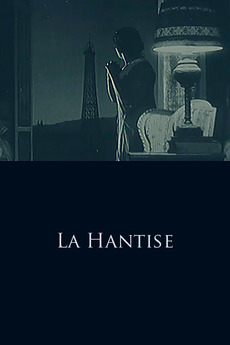
    La Hantise (or Obsession, for those of us not well-versed in French), is a French silent film from 1912 that chronicles a woman’s obsessive fear for her husband’s safety after an encounter with a palm reader at a party.

    Plot

    At the beginning of the film, Jacques Trevoux receives a letter from his friend advising him to postpone his transatlantic trip due to the large number of icebergs in the Atlantic Ocean, a condition that is making transatlantic ship travel dangerous. Jacques is reluctant to cancel, but his wife and son plead with him, so he acquiesces and plans to sail at a later date.

    A few days later, Jeanne meets a popular palm reader named Josepha at a party. Josepha reads Jeanne’s palm and supposedly discovers something so troubling that she refuses to share her findings with her client. Well, of course, Jeanne can’t leave it at that—she has to find out what the palm reader has seen in her palm, so she arranges a private meeting at the Trevoux home.

    When Josepha meets with Jeanne, the former reveals that the latter will face the imminent loss of a close loved one. Jeanne keeps the findings to herself and does not reveal them to her son or husband. Meanwhile, Jacques decides that it’s time to rebook his transatlantic trip, this time on the Titanic’s maiden voyage. He will board at Cherbourg, France.

    Once Jacques leaves for his trip, Jeanne, distraught over the palm reader’s prediction, writes to her godfather, Julien, asking him to come stay with her. When Julien arrives, Jeanne tells him about the palm reader’s prediction, but he laughs it off, turning his attention to the mail and newspaper that have just arrived. Among the items is a postcard from Jacques sent from the Titanic. But there’s something else: splashed across the front page of the the newspaper is a shocking report that the Titanic has sunk, killing 1,800 people. Jeanne and her son are, of course, devastated. In fact, the kid is so grief-stricken that he falls gravely ill.

    But no worries. Later, Jeanne receives another message from Jacques that he was among those saved by the Carpathia. That’s great news…except that the palm reader’s prediction is still on her mind, and she becomes worried that since Jacques didn’t die, their son may be in danger of succumbing to that fate.

    It Doesn’t Get Much Better Than This

    I like this movie, and one of the reasons is because it was produced so soon after the Titanic sank. It was released in 1912, the year of the sinking, and until a few months ago, I’d never even heard of it. I only know of two other films about the Titanic that were filmed and released in 1912: Saved from the Titanic and Un Nacht en Eis (In Night and Ice).

    Saved from the Titanic was written by Dorothy Gibson, a famous actress in 1912 and the star of the film. She was a first-class passenger who survived the sinking of the Titanic, and when she arrived in New York after being rescued, she began working on Saved from the Titanic, which was released later that year.

    I would love to see Saved from the Titanic. I mean, a Titanic film written by and starring an actual survivor? For someone who’s into Titanic film history, that would be amazing. But the chances of me actually seeing the finished product are extraordinarily slim. All known copies of the film were destroyed by a studio fire in 1914, and no copies are known to have survived. All that’s left are a few stills. It’s possible that a copy might crop up one day—it’s happened before with films that were thought to have been lost, but it’s not likely with this one.

    Something along the lines of La Hantise is the next best thing. Everyone involved in the production of the film was actually alive when the Titanic sank. The fashions that you see in the film, the hairstyles, the furniture—all of that is authentic to the period. It’s not people from a later era trying to recreate the environment after the fact. One scene that I love is the scene where Jeanne and her son drop Jacques off at the train station. You see their car pull up to the side walk, and there’s all this action going on in the background, people going about their lives in the hustle-bustle of an early 20th-Century city. It’s nothing out of the ordinary, really, but I find it fascinating.

    A Tale of Two Versions

    My experience viewing this film was a reminder of how important it is to check multiple versions of old films like this. Many films from this era have expired copyrights which no one has renewed, so there’s no infringement on who can display them or where. This is why I saw two versions of this film on YouTube, and the experiences of watching each couldn’t have been more different.

    It’s interesting how a few details can totally change how you view something. The first version of the film I viewed was a shortened, altered version, but I didn’t find this out until after I’d watched it. During my viewing of the film, I had no idea that Madame Trevoux’s first name was Jeanne until I was deep into the film, and that was only because you can see her name when you see the letter that she wrote to Julien. Up until that point, no one had addressed her by her first name. I thought it was a weird oversight, considering that she’s the main character in the film. Later, during my viewing of a second version of the film, I found out that the conclusion I’d reached was not at all accurate. I’ll explain why in a minute.

    The first version of the film also had no musical accompaniment whatsoever. I kept checking to see if maybe I’d somehow muted the video accidentally, but I hadn’t. That was just the way this version was. I mentioned earlier that this version of the film wasn’t even the full film. The last few minutes were missing, having been replaced by a card that explains what happened at the end of the film.

    By chance, I found a second version of the film that hadn’t shown up in my results when I first searched for the film (or maybe it had, and I’d simply overlooked it). The introductory frames told me that this version had been distributed by Kino, a company that distributes a lot of old films like this one, so I had high hopes that maybe this would be a full version with the scenes that had been missing from the first version I watched.

    Right away, I knew that I had a good version of the film, at least one that was better than the first one I watched. This one had music, and the title cards matched the rest of the film more than those in Version 1 (the cards in the first version of the film seemed like they were added later and were not original to the film). The scenes are so much more impactful with the music, especially the scene depicting the Titanic sinking, which features “Nearer My God to Thee.” Without the music, watching this scene is like watching a toy boat sink in a bathtub.

    One scene that I’d found a puzzling in Version #1 of the film made much more sense after I watched Version #2. Here’s what happens: One night, Jeanne looks out the window at what appears to be the Eiffel Tower. Something about the view unsettles her, but in Version #1, there’s no explanation about what it was. Version #2 of the film confirms that Jeanne is indeed looking at the Eiffel Tower and offers an explanation as to why Jeanne was so distraught. Apparently, Jeanne thinks that seeing tower lights come on are a bad omen. There’s no way in the world I would have known that without a title card to explain it.

    Version #2 provides a more detailed version of the ending, too. Both versions feature a scene where Julien writes a letter to Josepha requesting a palm reading for his niece. In Version #1, this scene is the very last scene, and it makes no sense whatsoever. It kind of made me think that it was a flashback scene and that Julien had set up that initial meeting between Jeanne and Josepha near the beginning of the movie.

    Fast-forward to Version #2. The scene is still in the film, but it’s also accompanied by a title card explaining that Julien and Jeanne have hatched a plan to test whether Josepha is a fake. Jeanne will pose as Julien’s niece and will hide behind a curtain, sticking her hand through so that Josepha can read her palm. The palm reader predicts a glowing future for the bride-to-be. Julien reveals his trickery, and Josepha flees, leaving her purse behind. Julien finds a letter in it: basically, Josepha has been running a con game with an acquaintance, who has advised her to take advantage of as many people as she could. With the exception of the scene where Julien writes the letter, we don’t actually get to see these scenes because they actually are missing. But the key is that the scenes are described on a series of cards, so there’s context here in Version #2 where none exists in Version #1.

    In Version #2, we also get to see the final scene of the film, an epilogue which depicts the family enjoying a meal at the table after Jacques returns home. The Trevoux boy is healthy again, and Jeanne has overcome her obsession and her belief in palm readers. Interestingly, the epilogue wasn’t part of the original film and was added in 2007 by a French film studio called Gaumont, which used source material from the original screenplay and an incomplete print held at Archives Francaises du film du CNC.

    While I wish that La Hantise featured more Titanic scenes, I’m glad for the one scene that we get featuring the ship. And the historical tidbits about that I gleaned about the era from other scenes do a lot to make up for the lack of Titanic. The film isn’t a must-see if your interest is purely Titanic. However, if you’re interested in the era in addition to the ship, you’ll probably find that it’s worth it, even if you only see it just once.

  • Titanic Week 2016

    Titanic Week 2016

    It’s Titanic Week! In observance of the 104th anniversary of the sinking of the Titanic, I’ll be spending a little time with the “Ship of Dreams”. The Titanic sank in the early morning hours of April 15, 1912, but I’ll be dedicating over a week (April 10th to April 18th) to the ship, her people, and her legacy. Each day during this period, you’ll find a new post that discusses a topic related to the Titanic.

    Here’s a preview:

    • We’ll look at the historical depiction of the Titanic in film with reviews of two early Titanic films, La Hantise and Atlantic.
    • You wouldn’t think it, but there are actually some surprising connections between my home state of Mississippi and the Titanic that I stumbled across during my time at the Mississippi Department of Archives and History. I’ll tell you about a few of those.
    • And I’ll be looking the ship and the sinking through a more scholarly lens by exploring some of the ways that they have been remembered and how they have impacted popular culture.

    I’ve been wanting to do something like this blog for over a year, but this is the first year I’ve gotten my act together enough to get organized and do it. It takes a bit more planning and work than my own little private Titanic movie festival. Every year, from April 10th to the 18th, I’d watch one Titanic film each night, and this is was the extent of my Titanic Week activities. At some point during the past couple of years, though, it dawned on me that just watching the movies wasn’t enough for me anymore. For one, there are more Titanic movies now than there were when I first started doing Titanic Week, making it more difficult to fit all of them into the nine days that make up my “week”. I needed to try something new, and I think this blog series, which I’m planning to do yearly, may just be it. We’ll see how it goes!